
Do schools still need references if a candidate has an enhanced DBS?
Yes. A DBS shows criminal record information. A reference shows how someone behaved at work. KCSIE expects schools to get both.

DBS vs references: do schools need both?
Yes. On DBS vs references, schools need both. An enhanced DBS check with barred list information shows criminal record information and whether someone is barred from working with children. A reference shows conduct at work, including disciplinary matters and safeguarding concerns that never reached the police. KCSIE Part three sets out both. RefAssure collects the written references; the DBS check runs separately.
What each check can tell you.
| Enhanced DBS with barred list | Written employment reference | |
|---|---|---|
| Convictions and cautions | Yes, unspent ones and spent ones that are not filtered | No |
| Children's barred list status | Yes | No |
| Relevant local police information | Sometimes, if the police judge it relevant | No |
| Conduct and performance in role | No | Yes |
| Internal disciplinary investigations | No | Yes, if the referee is asked |
| Substantiated safeguarding concerns | Not unless it led to a conviction, caution or barring | Yes, the facts, where they met the harm threshold |
| Reason for leaving | No | Yes |
Why a clear DBS is not enough
A DBS certificate is a record of criminal record information held by the police and the barred lists. It cannot show what happened inside a previous school. A member of staff could leave after an internal investigation into their conduct with pupils, with no police involvement, and still have a clear certificate.
That is the gap a reference fills. Keeping children safe in education says references are there to give employers factual information to support appointment decisions. When a school writes a reference, KCSIE says it should confirm whether it is satisfied the person is suitable to work with children and give the facts of any substantiated safeguarding concerns that met the harm threshold.
What KCSIE asks schools to do with references
- Obtain them before interview where possible, so concerns can be explored.
- Not accept open references or rely on the candidate to obtain them.
- Get one from the current employer, completed by a senior person. For a school referee, confirmed by the headteacher as accurate on disciplinary investigations.
- Compare the reference with the application form and take up any discrepancies.
- Establish the reason for leaving and resolve concerns before confirming the appointment.
For teachers, schools also check for prohibition orders using the Department for Education's Check a teacher's record service. That is a third, separate check.

A sensible order for the checks.
Shortlist and declare
Shortlisted candidates complete a self-declaration. Tell them online searches may be done.
References before interview
Request references as soon as you shortlist, so concerns can be raised at interview.
Conditional offer
Offer subject to the enhanced DBS, barred list, right to work and other checks.
Record and confirm
Record each check on the single central record before the start date.
References back before interview day.
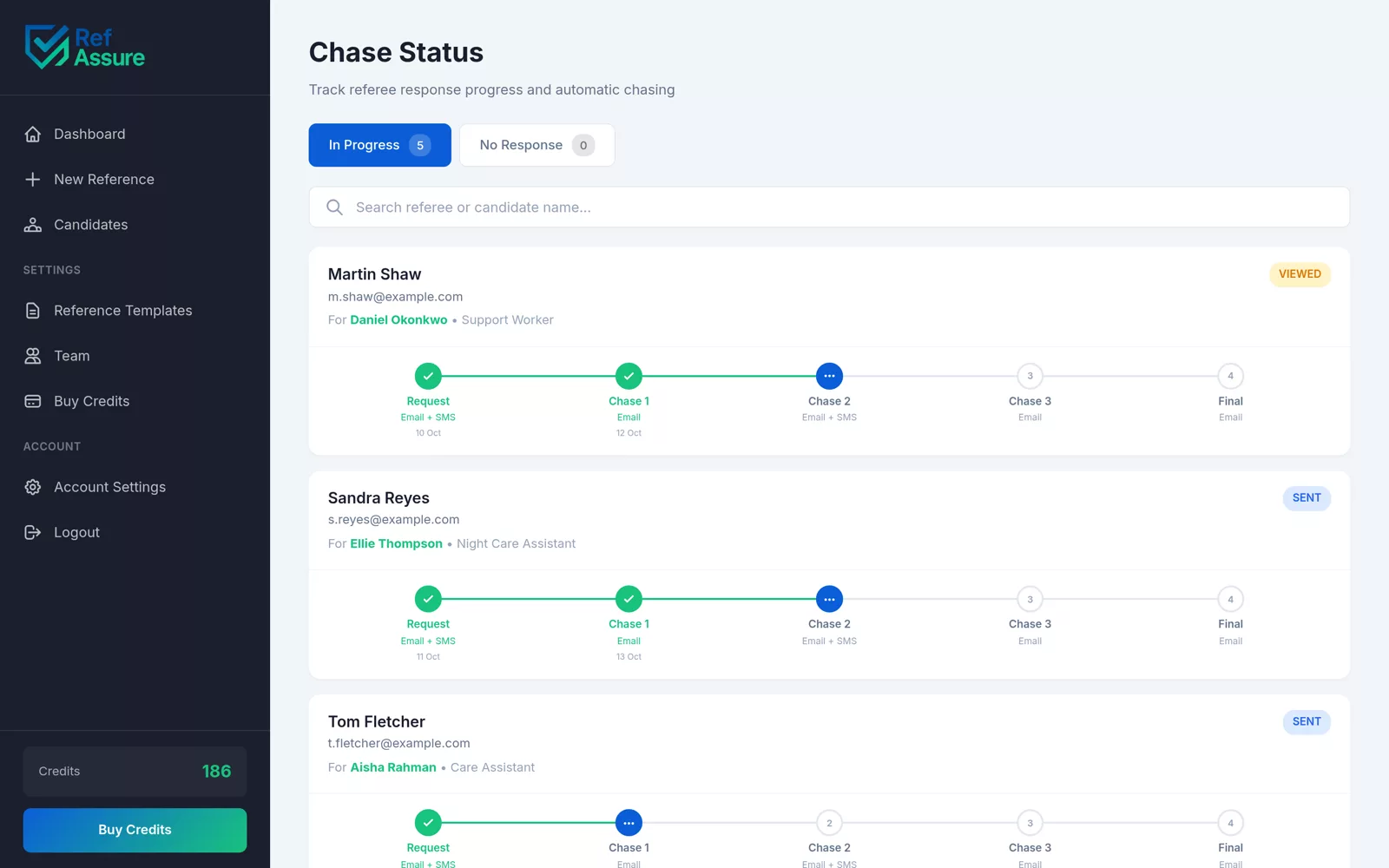
RefAssure sends the request the moment you shortlist and chases for you, so references are in hand when you need them.
- Online candidate consent with signature before referees are contacted
- Add your safeguarding and disciplinary questions to your template once
- 5 emails and up to 2 texts over 12 days, stopping when the referee submits
- Signed PDF with a timestamped audit trail for the file
DBS and reference questions
More in the full FAQs.
Can a DBS check replace references for school staff?
No. KCSIE treats them as separate checks covering different risks. A DBS shows criminal record and barring information; a reference covers conduct at work and the reason for leaving.
Should references come before or after the DBS?
KCSIE says schools should obtain references before interview where possible. The DBS usually follows a conditional offer. See our school pre-employment checks guide for the full sequence.
Does an enhanced DBS show internal disciplinary action?
Not unless it led to a conviction, caution, barring or police information that the police chose to disclose. That is why references should ask about disciplinary investigations directly.
Does RefAssure run DBS checks?
No. RefAssure handles references and employment history. DBS checks go through the Disclosure and Barring Service or a registered umbrella body. Our DBS checks guide explains the levels.
Do I need both checks for support staff?
Part three of KCSIE covers the recruitment of all school staff, so yes, references matter for support roles too. Our support staff references page covers the detail.
How fast are references with RefAssure?
Across 229 completed references, the median was about 23 hours and half came back within 24 hours. Your first reference is free.
Related guides
The check a DBS cannot do.
Your first reference is free. Written, signed and chased for you.