
What references do NHS bank staff need?
Bank workers go through the NHS employment checks too. Here is what the reference standard asks for, and how to get references back without delaying shifts.
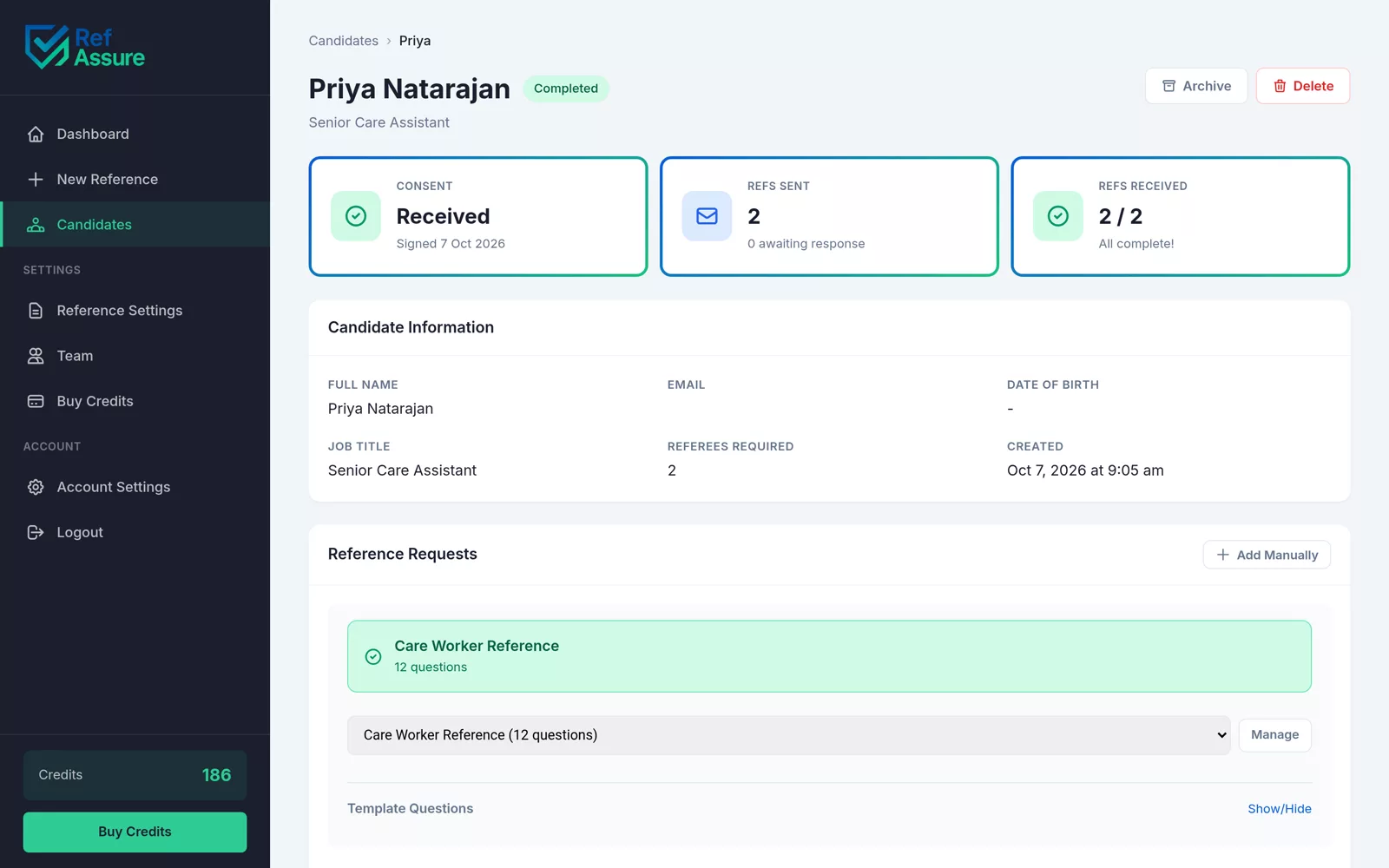
NHS bank staff need written references that verify at least three consecutive years of employment or training, as set out in the NHS Employers employment history and reference checks standard. A bank worker coming from another NHS organisation needs, at minimum, a reference from their current or last NHS employer. RefAssure collects these online, chases referees for you and files a signed PDF with a full audit trail.
How the NHS reference standard applies to bank workers
NHS Employers publishes six employment check standards: identity, right to work, professional registration and qualifications, work health assessments, criminal record checks, and employment history and references. Bank workers are covered in the same way as staff on substantive contracts. A short notice shift does not change what the file needs to show.
Three consecutive years, in writing
For a new external appointment, the standard asks you to validate three consecutive years of employment and/or training before the application. How many references that takes depends on the person. Someone in one job for five years may need one; someone who has moved between trusts, agencies and study may need three or four. The history should be obtained in writing, and any gaps should be explained by the applicant and explored at interview.
Coming from another NHS organisation
Many bank workers hold a substantive post at another trust. Where someone moves from another NHS organisation, you should at minimum seek a reference from their current or last NHS employer. Always get the candidate's permission before you approach a current employer.
Existing staff joining your own bank
Where one of your own employees joins your staff bank, or moves within it, the standard points HR towards verifying your own records rather than starting the whole process again. Check what your trust policy says about refreshing references for long serving bank workers.
For the full picture of all six standards, see our guide to NHS references and the employment check standards.
Where bank references get stuck.
The same few situations slow down most bank activations. Plan for them up front.
A substantive post elsewhere
The most useful referee is often their current ward manager. Ask permission first, then send the request the same day.
Lots of agency placements
The standard lets you judge what is proportionate for agency histories. A reference from the agency itself is often the practical route.
Students and newly qualified
Use an academic tutor for training periods, and character references where there is little work history to cover.
Gaps in the history
Ask the applicant to account for every gap in writing, then explore anything unclear at interview before activation.

Referees chased while you fill rotas.
Each referee gets 5 emails and up to 2 texts over 12 days, stopping the moment they submit. You do not send a single reminder.
Every bank worker in one view.
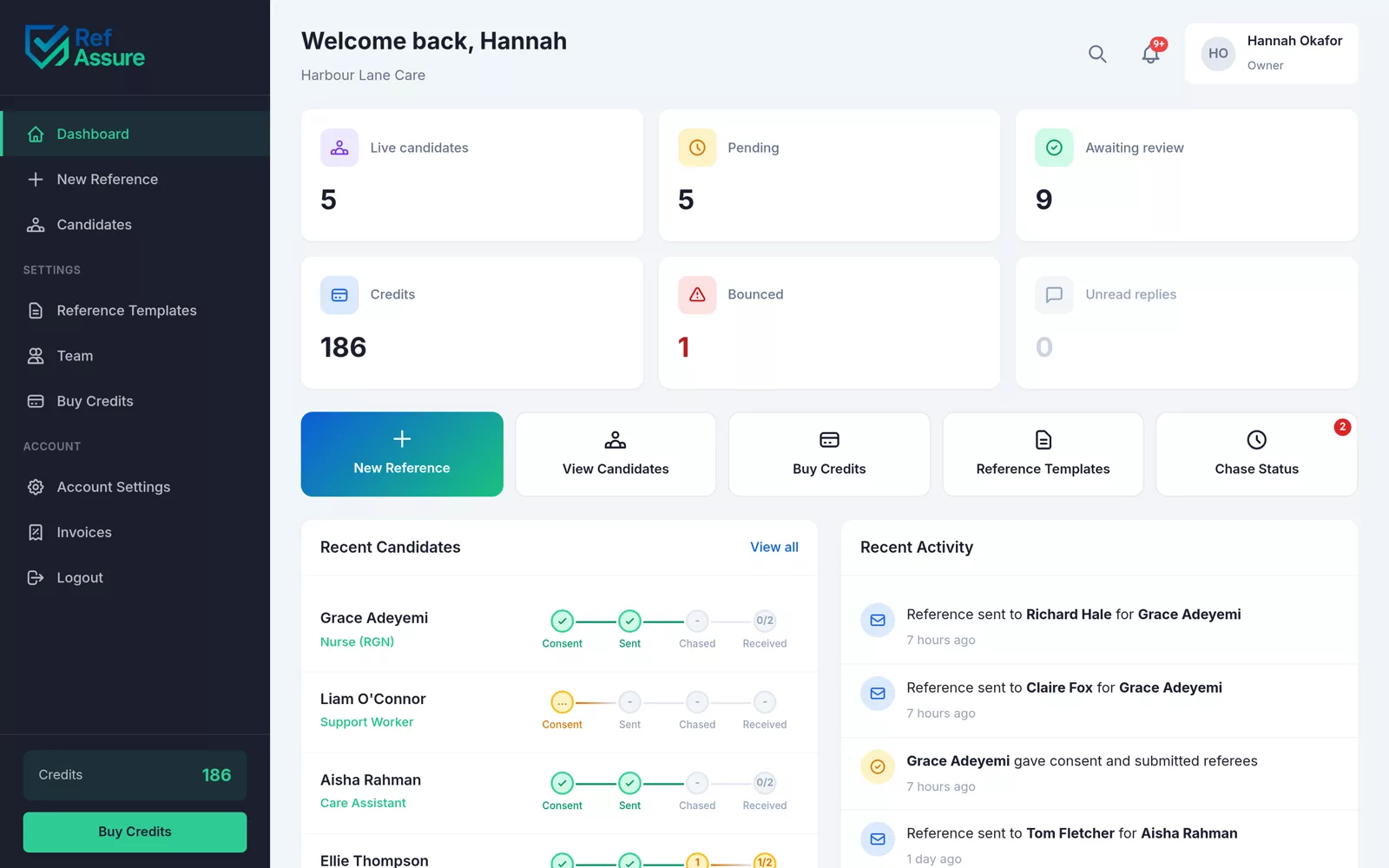
See who is waiting on consent, who is waiting on a referee and who is ready to book, without opening an inbox.
- Candidate consent and signature collected online before any referee is contacted
- Bounced referee emails flagged, mostly within minutes, so you can ask for a better address
- Replies sent by email instead of the form are captured and forwarded to you
- Unlimited team members on shared credits, so bureau staff can all work from one account
NHS bank staff reference questions
More in the full FAQs.
Do NHS bank staff need references?
Yes. The NHS Employers employment check standards cover bank and temporary workers as well as substantive staff. References should verify three consecutive years of employment or training, in writing. See NHS reference requirements for the detail.
How many references does a bank worker need?
Enough to cover three consecutive years. That might be one reference for someone with a long single job, or several for someone with a mixed history. The number follows the history, not a fixed count.
Can a bank worker start before references come back?
Your trust policy and risk assessment decide that, not the software. The safest position is to complete references before the first shift. Median turnaround on RefAssure is about 23 hours, and half of references come back within 24 hours.
Who should give a reference for an NHS bank worker?
The current or last NHS employer where they are moving from another NHS organisation, then previous employers or training providers to cover three years. Referees should give their name, job title and contact details so the reference can be verified.
What else do bank staff need besides references?
Identity, right to work, professional registration where relevant, a work health assessment and the right level of criminal record check. RefAssure handles the references. See NHS pre-employment checks, right to work checks and DBS checks.
How much does it cost to reference a bank worker?
Your first reference is free. After that, credits cost from 99p down to 80p per reference, with no monthly fee, no contract and no VAT added. Credits never expire, so quiet months cost nothing. See pricing.
Related guides
Bank references back before the shift.
Your first reference is free. Two minutes to send, and RefAssure does the chasing.