
CQC Regulation 19 and Schedule 3: staff checks explained
One rule covers care homes, homecare, GP surgeries, dental practices and clinics alike. Here is what it asks for, in plain words.

What is CQC Regulation 19?
CQC Regulation 19 is the fit and proper persons employed rule in the Health and Social Care Act 2008 (Regulated Activities) Regulations 2014. Every CQC-registered provider must employ staff of good character, with the right qualifications, competence and experience, and able to do the job after reasonable adjustments. Providers must hold the Schedule 3 information for each person, confirmed before they start.
What Regulation 19 requires
Regulation 19 applies to every provider registered with the Care Quality Commission in England. It does not separate care from healthcare: a residential home, a domiciliary care agency, an independent clinic, a GP practice and a dental practice all work to the same rule. CQC's guidance breaks it into five parts.
- Fit and proper staff. People must be of good character, have the qualifications, competence, skills and experience the work needs, and be able to do the tasks intrinsic to the role after reasonable adjustments.
- Effective recruitment. Procedures must make sure people meet those conditions. If a third party carries out checks, the provider must confirm they are complete and satisfactory.
- Schedule 3 information. The provider must hold the information in Schedule 3 for each person employed, plus anything else the law requires.
- Professional registration. Anyone who needs registration with a professional regulator must hold it.
- Ongoing fitness. If someone stops being fit and proper, the provider must act, and tell the relevant regulator where needed.
"Person employed" includes volunteers, contractors, and agency or bank staff. CQC cannot prosecute for a breach of Regulation 19 on its own, but it can take regulatory action, and it must refuse registration to a provider that cannot satisfy it.
The Schedule 3 list
Schedule 3 to the 2014 Regulations sets out the information required for each person employed:
- Proof of identity including a recent photograph.
- A criminal record certificate where the role is eligible.
- An enhanced criminal record certificate, with suitability information relating to children or vulnerable adults (the barred lists) where applicable.
- Satisfactory evidence of conduct in previous employment concerned with health or social care, or with children or vulnerable adults.
- Where the person worked with children or vulnerable adults, satisfactory verification, so far as reasonably practicable, of why that employment ended.
- Documentary evidence of relevant qualifications, so far as reasonably practicable.
- A full employment history, with a satisfactory written explanation of any gaps.
- Satisfactory information about any physical or mental health conditions relevant to the person's capability, after reasonable adjustments.
The Schedule defines "satisfactory" as satisfactory in the opinion of the Commission. In practice, that means evidence you can show and explain to an inspector.
What counts as satisfactory conduct evidence?
Items 4, 5 and 7 are where most files fall short. These habits make the evidence hold up.
From the employer, in writing
A reference from the previous care or health employer, signed by someone in a position to know, beats a personal character reference.
About conduct, not just dates
Ask about conduct, any disciplinary or safeguarding processes, and whether they would employ the person again.
The reason for leaving
Ask the referee to confirm why the job ended, and compare it with what the candidate told you.
Before the start date
Schedule 3 information must be confirmed before someone is employed. Keep the date each item arrived.

Evidence for items 4, 5 and 7, collected for you.
RefAssure handles the references and employment history part of Schedule 3, from consent to a signed PDF you can hand an inspector.
- Online candidate consent with a signature, before any referee is contacted
- Add your conduct, reason for leaving and re-employ questions to your template once
- Referees sign on a secure link, and replies sent by email are captured too
- A PDF audit trail with timestamps for consent, requests, reminders and completion
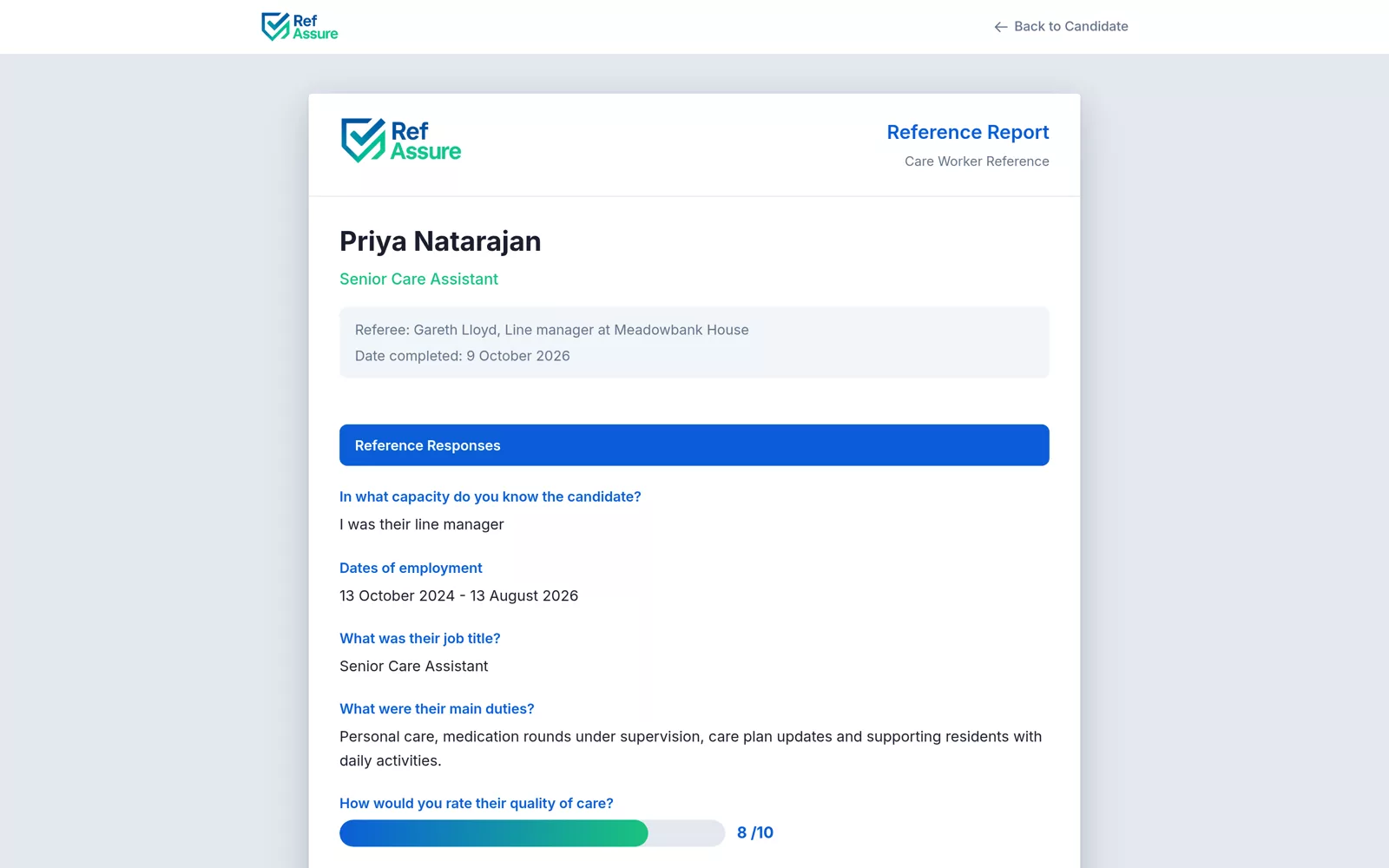
Chased for you, day by day.
5 emails and up to 2 texts over 12 days, stopping the moment the referee replies.
Regulation 19 questions
More in the full FAQs.
Does Regulation 19 apply to GP and dental practices?
Does Schedule 3 say how many references you need?
Does Regulation 19 cover agency and bank staff?
Do volunteers need a full employment history?
How is Regulation 19 different from Regulation 5?
Can CQC prosecute for a Regulation 19 breach?
Does RefAssure cover DBS or registration checks?
Related guides
Schedule 3 evidence, signed and filed.
Your first reference is free. Then from 80p, no monthly fee.