
GLAA licensing: what labour providers must check
Who needs a GLAA licence, how labour users check one, and where worker references fit for licensed providers.

What is the GLAA?
The GLAA is the Gangmasters and Labour Abuse Authority. It licenses businesses that supply workers into agriculture, horticulture, shellfish gathering and the associated processing and packaging, under the Gangmasters (Licensing) Act 2004. Supplying workers in these sectors without a licence is a criminal offence, and so is using an unlicensed provider. Labour users can check a licence on the GLAA public register.
Who needs a GLAA licence?
You need a GLAA licence, often called a gangmasters licence, if you supply workers, or use workers to provide a service, in these regulated sectors:
- Agriculture.
- Horticulture.
- Shellfish gathering.
- Processing and packaging of produce from agriculture, shellfish and fish.
The GLAA reads supply widely, and the scheme covers temporary and permanent workers. A licence is needed for work in the UK even if the business is based overseas. There are exclusions, so check the GLAA guidance on who needs a licence, or contact the GLAA, if you are unsure.
What are the penalties?
Acting as a gangmaster without a licence carries a maximum of 10 years in prison and an unlimited fine. Using an unlicensed labour provider is a separate offence, with a maximum of six months in prison and a fine.
Does warehouse work need a GLAA licence?
General warehousing and distribution usually fall outside the scheme. Packing or processing produce from farms, shellfish or fish can bring the work into scope. If your sites pack fresh produce, check the guidance before you supply labour.
Beyond licensing, the GLAA also investigates labour exploitation and modern slavery more widely.
For labour users, the practical rule is simple: check the register before you engage a provider in a regulated sector, keep a dated record of the check, and repeat it regularly.
How to check a GLAA licence, as a labour user.
Get the details
Ask the provider for their licence number, also called the unique reference number, and their registered name.
Search the register
Use the GLAA public register to search by name, location or reference number.
Check the scope
Confirm the licence is active and covers the sectors you need, and note the authorised persons.
Recheck regularly
Licences can be revoked. Recheck on a schedule and before every new contract, and keep a record.

Checks licence holders run on workers.
GLAA licensing standards focus on how workers are recruited, treated and paid. Good records of each worker support that.
Right to work
Follow Home Office guidance for every worker. See our right to work guide for the steps.
Signs of exploitation
Watch for shared bank accounts, many workers at one address, or someone else speaking for the worker.
Work history
An employment history check confirms where someone has worked and gives you a written record from previous employers.
Worker references, on record.
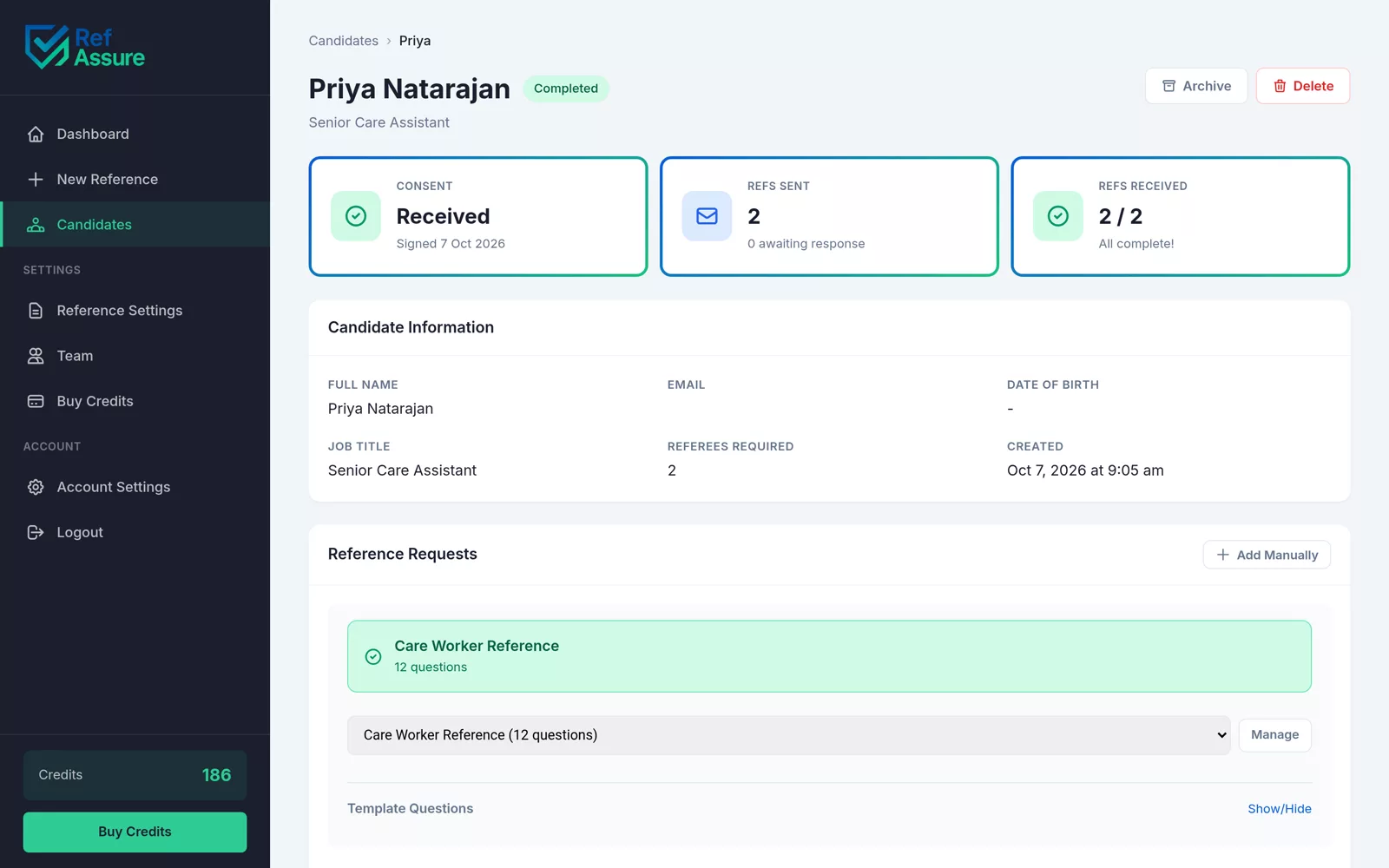
RefAssure collects references and employment history for your workers, with consent first and a signed PDF at the end.
- Worker consent and signature collected online before referees are contacted
- Referees chased with 5 emails and up to 2 texts over 12 days
- Credits never expire, so buy before harvest and use them all season
- From 80p a reference, no monthly fee and no VAT added
GLAA questions
More in the full FAQs.
What does GLAA stand for?
Gangmasters and Labour Abuse Authority. It took over from the Gangmasters Licensing Authority and runs the licensing scheme for labour providers in the regulated sectors.
How do I check if a labour provider has a GLAA licence?
Search the GLAA public register by name, location or licence number. It shows whether the licence is active and the sectors it covers. Some businesses falsely claim to be licensed, so always check.
Does the GLAA licence cover the whole UK?
The licensing scheme applies across the UK, including to overseas businesses supplying workers into the regulated sectors here.
What happens if a GLAA licence is revoked?
The business must stop supplying workers into the regulated sectors. Labour users who keep using it risk committing an offence, which is why regular register checks matter. The GLAA publishes revocations on its website.
Who is the principal authority on a GLAA licence?
The principal authority is the person named as responsible for the licence and for making sure the business meets the licensing standards. They must pass the GLAA fit and proper test. Check the current requirements in the GLAA licensing standards.
Does the GLAA require worker references?
The licensing standards focus on fair recruitment, treatment and pay rather than naming references. Many licence holders reference workers anyway as part of good record keeping. RefAssure handles that part.
Does RefAssure check GLAA licences or right to work?
No. You check licences on the GLAA register and right to work under Home Office guidance. See right to work checks. RefAssure collects references and employment history.
Related guides
Worker references, every season.
Your first reference is free. Credits never expire.