
Can a reference mention whistleblowing? Rules for healthcare employers
A bad reference given because someone raised a concern can be unlawful detriment. Here is what referees and hiring managers need to know.

Can a reference mention whistleblowing?
On whistleblowing references, the short answer is that a reference must not penalise someone for making a protected disclosure. Under the Public Interest Disclosure Act 1998, workers are protected from detriment for whistleblowing, and the courts have confirmed this can include a damaging reference given after the job ends. NHS employers also must not discriminate against job applicants who appear to have blown the whistle.
What the law says
The Public Interest Disclosure Act 1998 added whistleblowing protection to the Employment Rights Act 1996. A worker who makes a protected disclosure, such as raising a genuine concern about patient safety, has the right not to be subjected to a detriment because of it.
References after someone has left
In Woodward v Abbey National (2006), the Court of Appeal held that the protection can extend beyond the end of employment. A former employer who gives an unfavourable reference because the person blew the whistle can face an employment tribunal claim.
NHS job applicants
The Employment Rights Act 1996 (NHS Recruitment, Protected Disclosure) Regulations 2018 stop NHS employers covered by the regulations from discriminating against a job applicant because it appears to them that the applicant has made a protected disclosure. They followed Sir Robert Francis's Freedom to Speak Up review, which found some people struggled to find NHS work after raising concerns.
This page is a plain-English summary, not legal advice. Acas and the whistleblowing charity Protect publish detailed guidance, and the National Guardian's Office supports Freedom to Speak Up guardians in NHS organisations.
Writing a fair reference as a referee.
A referee owes a duty to give a reference that is true, accurate and fair. In practice that means:
Stick to facts
Dates, role, duties and substantiated matters. Opinions should be fair and backed by evidence.
Leave the disclosure out
Do not refer to concerns the person raised in a way that counts against them, or describe them as a troublemaker.
Be consistent
Give the same kind of reference you would give anyone else in that role.
Separate genuine issues
Real, evidenced conduct or capability concerns can still be reported factually. Speaking up is not one of them.

What hiring managers should avoid
- Do not ask referees whether the candidate has ever raised concerns or blown the whistle as a screening question.
- Do not treat a reference that mentions a disclosure as a reason to reject. Take advice if a reference seems to do so.
- Ask about conduct, competence and patient safety directly, so the reference focuses on how the person worked.
- Keep a record of what you asked and what came back, so your decision is easy to explain.
Some organisations ask whether a candidate has shown openness and a willingness to raise concerns as a positive value. If you do, frame it as a value you are looking for, never as a risk to screen out.
Same questions, every candidate.
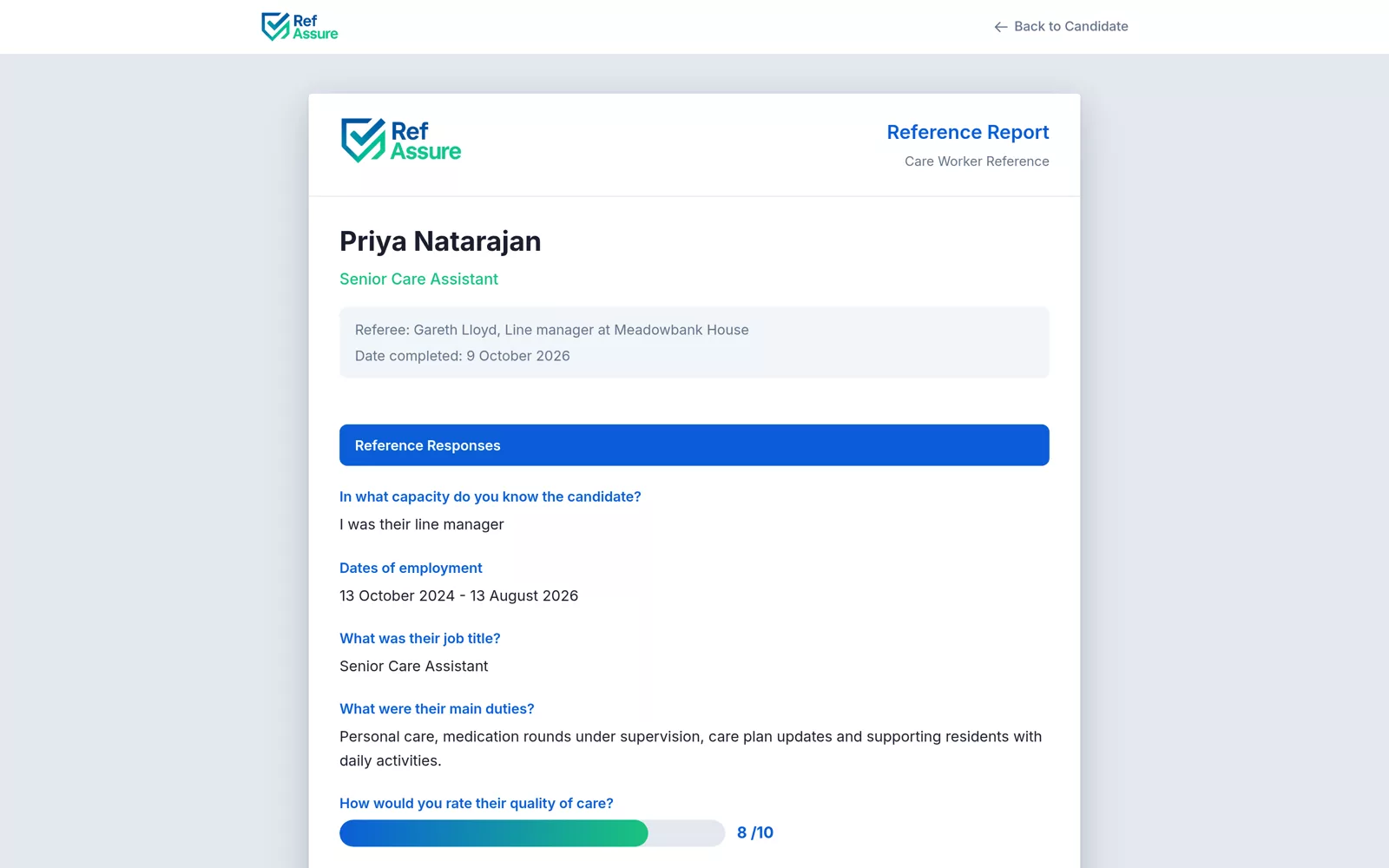
Consistency protects you and the candidate. RefAssure sends the same template to every referee and keeps the evidence.
- One template per role, up to 25 questions, reused for every hire
- Candidate consent collected online, with signature, first
- Referees sign their answers on a secure link
- PDF with a timestamped audit trail of what was asked and answered
Whistleblowing and reference questions
More in the full FAQs.
Can a former employer give a bad reference because I raised concerns?
They should not. The courts have held that whistleblowing protection can cover detriment after employment ends, including an unfavourable reference. Acas and Protect can advise on what to do.
Can a referee mention a disciplinary process that followed a disclosure?
This is complicated and depends on the facts. A referee can report genuine, evidenced conduct matters, but not if the real reason is the disclosure. Take legal advice before writing that reference.
Are job applicants protected outside the NHS?
The 2018 regulations cover applicants to NHS employers. In Sullivan v Isle of Wight Council (2025), the Court of Appeal confirmed that the wider protection does not extend to job applicants in general.
What is Freedom to Speak Up?
It is the NHS programme that followed the Francis review, supported by the National Guardian's Office. NHS trusts have Freedom to Speak Up guardians who staff can raise concerns with.
How does RefAssure help?
It sends the same questions to every referee, collects candidate consent first and keeps a signed audit trail. That makes your process consistent and easy to evidence. See how it works.
Related guides
Fair, consistent references.
Your first reference is free. Two minutes to send, and RefAssure does the chasing.