
Domiciliary care compliance: references for homecare staff
Your carers work alone in people's homes. That raises the bar on recruitment checks, and the rota will not wait for slow referees.
What does domiciliary care compliance involve?
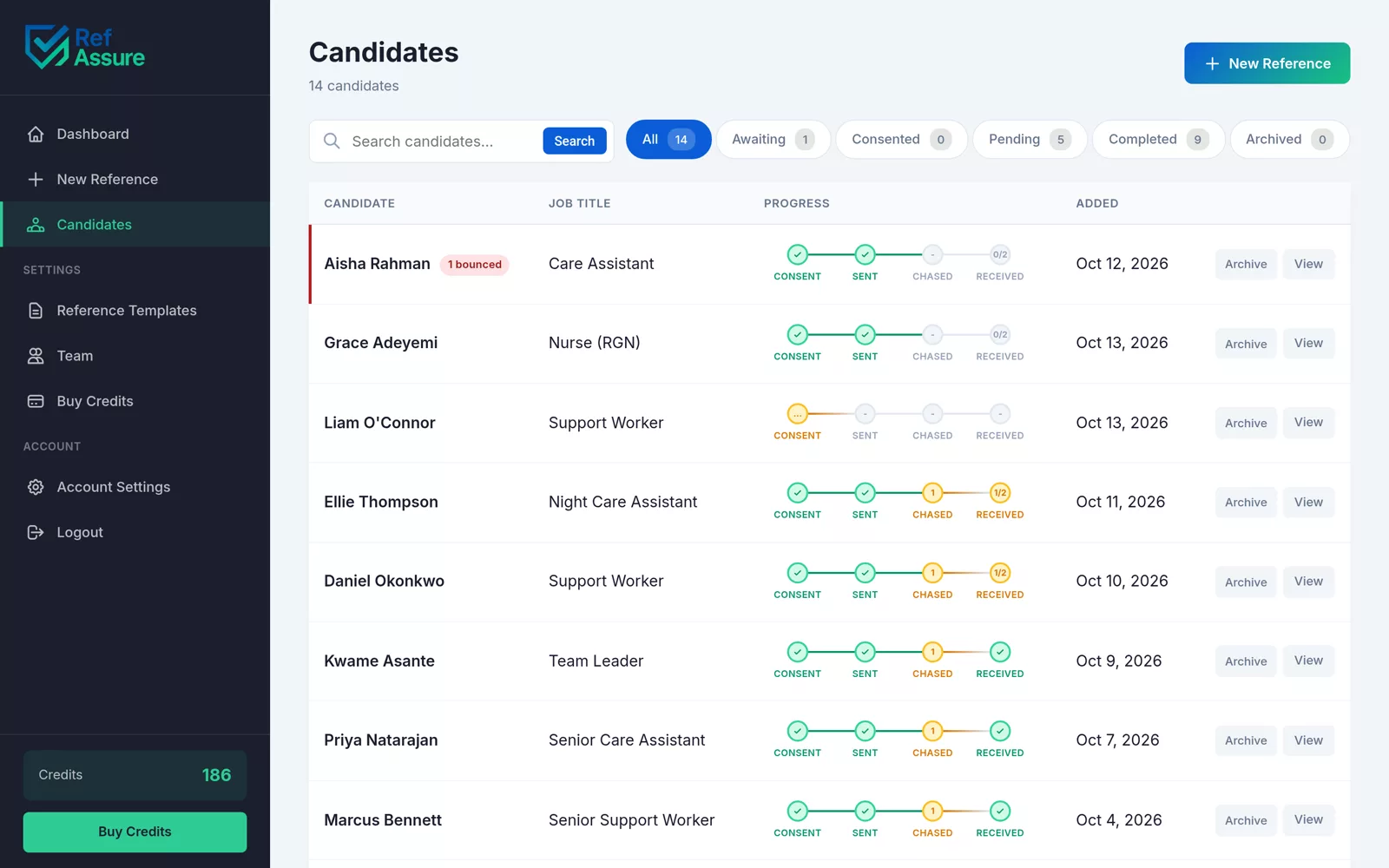
Home care agencies that provide personal care in England register with CQC and must meet the 2014 Regulations. For staffing, that means Regulation 19: before a carer visits anyone, hold the Schedule 3 checks, including an enhanced DBS with barred list, evidence of conduct in previous care roles and a full employment history. Then train, supervise and spot check. RefAssure handles the references.
Why homecare references matter more.
In a care home, a colleague is usually nearby. In domiciliary care, the carer is often the single person in the room. Ask referees about the risks that come with that.
Lone working
Ask whether the person worked without direct supervision, and how they handled it. Did they follow procedures when nobody was watching?
Access to homes and money
Ask about honesty and any concerns with property, keys, shopping money or finances of the people they supported.
Medication and records
Ask whether they gave or prompted medication, and how accurate their care notes and visit records were.
Reliability on a rota
Missed and late calls hurt people at home. Ask about timekeeping, attendance and covering calls.
Disciplinary and safeguarding
Ask whether they were subject to any disciplinary or safeguarding process, and the outcome if the referee can share it.
Reason for leaving
Schedule 3 asks you to verify why earlier care roles ended. Ask the referee to confirm it in writing.
From application to first visit.
Apply and consent
Collect the full employment history, explanations for gaps, and consent. Send reference requests the same day.
Interview and documents
Check ID, right to work and qualifications. Talk through gaps and reasons for leaving.
DBS and induction
Apply for the enhanced DBS with the adults barred list. Start induction training aligned with the Care Certificate standards.
Shadowing, then solo
With every check confirmed, the carer shadows experienced staff before working alone, with spot checks after.

What CQC looks for in a homecare agency
CQC registers home care agencies for the regulated activity of personal care. Inspectors look at how you recruit, train and support staff, and they may sample staff files. For recruitment, the legal standard is Regulation 19 and Schedule 3: the information must be confirmed before the person is employed.
CQC guidance also expects new care staff to be supervised until assessed as competent, and expects Care Certificate standards for social care support workers. In homecare that usually means shadow shifts before solo visits.
Domiciliary care references: common gaps
- A carer starts before references are back because the rota is short. This is the gap inspectors find most easily, as the dates are on file.
- A reference confirms dates and nothing else. Satisfactory evidence of conduct needs more than dates of employment.
- No reference from the last care employer, with no record of why. If a referee will not reply, record your attempts and ask for another.
- Gaps not explained in writing. A verbal explanation at interview needs writing down.
- Bank and casual carers checked less thoroughly. CQC guidance counts bank and agency staff as people employed, so the same checks apply. See bank staff references in care.
Rotas wait. Referees get chased.
5 emails and up to 2 texts over 12 days, stopping the moment the referee replies. After day 12 you are told, so you can add another referee and keep the start date.
Domiciliary care questions
More in the full FAQs.
Do domiciliary care agencies have to register with CQC?
How many references does a homecare worker need?
Can a home carer start before references arrive?
What if the candidate has never worked in care?
Is domiciliary care different from supported living?
How quickly can homecare references come back?
Does RefAssure do DBS checks for home carers?
Related guides
Fill the rota with checked carers.
Your first reference is free. No card, no monthly fee, no VAT added.