
Safe recruitment in the care sector
A practical, step by step guide for care managers: what to do at each stage, what to record, and where most files go wrong.

What is safe recruitment in care?
Safe recruitment is the process care providers use to keep unsuitable people away from those they support. It runs from the advert to the first shift: clear role requirements, a full application and employment history, values-based interviews, references from previous care employers, ID, right to work, an enhanced DBS check and health information, all confirmed and recorded before the person starts, as CQC Regulation 19 expects.
Safe recruitment, stage by stage.
Plan and advertise
Write a clear job description and person specification. State in the advert that checks, including references and DBS, are part of the process.
Apply and shortlist
Use an application form with a full employment history, not just a CV. Spot gaps and get consent to contact referees.
Interview and check
Ask values-based questions. Explore gaps and reasons for leaving. Check ID, right to work and qualifications.
Offer, then confirm
Make the offer conditional. Complete DBS, health and outstanding references, then sign off the file before day one.
The safe recruitment process in detail
In care, the term is "safe recruitment". Schools use "safer recruitment", a phrase tied to statutory guidance in education. The principles overlap, but the legal standard for CQC-registered care is Regulation 19 and Schedule 3.
1. Before you advertise
Decide what the role involves and what checks it needs. Will the person give personal care? That usually makes it regulated activity, so the enhanced DBS check with the adults barred list applies. Will they work with children too? Set this out in the job description so candidates know what to expect.
2. Application form
Schedule 3 asks for a full employment history with a satisfactory written explanation of any gaps. An application form that asks for every role, with start and end dates by month, makes gaps easy to see. Ask the candidate to explain each gap in writing.
3. References early
Collect consent and send reference requests at shortlisting. Ask previous care employers about conduct, any disciplinary or safeguarding processes and why the person left. Answers then reach you before interview, while you can still ask about them. See safeguarding reference questions.
4. Interview
Use values-based questions about dignity, honesty and how the candidate would handle a concern. Discuss every gap and reason for leaving, and write down what was said. Check original ID, right to work and qualifications.
5. Conditional offer and checks
Apply for the enhanced DBS check, gather health information relevant to the role, and check professional registration where needed. Risk assess any disclosure before deciding.
6. Sign off, induct, supervise
Review the full file before day one. CQC guidance says Schedule 3 information must be confirmed before someone is employed, and that new staff should be supervised until assessed as competent. Then keep reviewing fitness during employment.

Safe recruitment practices that hold up.
The habits that separate a file you can defend from one you have to explain.
Date everything
Record when each check arrived. A check that came back after the start date is easy for an inspector to spot.
Same checks for everyone
CQC guidance counts bank, agency staff and volunteers as people employed. Do not cut corners on short contracts.
Written, signed references
Phone references are hard to evidence later. A signed written reference speaks for itself.
Record your decisions
If you appoint despite a concern, write down why. CQC guidance says those reasons should be recorded.
Check third-party work
If an agency or umbrella body does checks for you, confirm they are complete and satisfactory.
Keep it going
Safe recruitment does not end at the start date. Review fitness, supervision and registration over time.
The reference stage, handled.
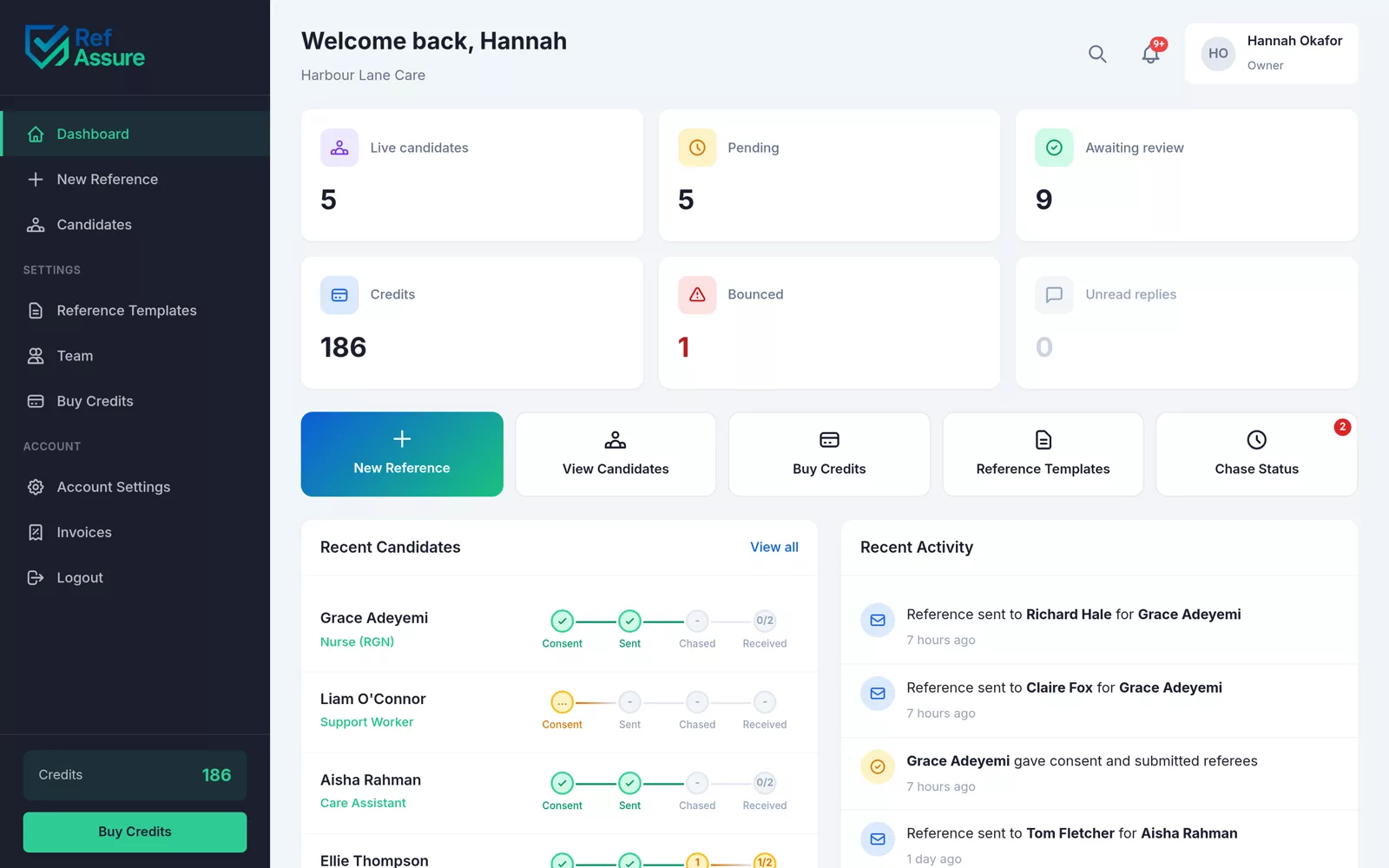
References are where safe recruitment usually stalls. RefAssure runs that stage for you and keeps the evidence.
- Candidate consent collected online, with a signature, before referees are contacted
- 5 emails and up to 2 texts over 12 days, stopping when each referee replies
- Median about 23 hours across 229 completed references (October 2026)
- Signed PDF with timestamps for consent, requests, reminders and completion
Safe recruitment questions
More in the full FAQs.
What is the difference between safe and safer recruitment?
What checks are part of safe recruitment in care?
Do I need a safe recruitment policy?
Can someone start work before checks are complete?
Who should do safe recruitment training?
What does RefAssure cover?
Related guides
Make the reference stage the easy part.
Your first reference is free. Two minutes to send, and RefAssure does the rest.