
Barred list checks: what care employers must do
You cannot search the barred lists yourself. Here is how the check really works, and where references pick up what it cannot see.

What is a barred list check?
A barred list check confirms whether someone is barred by the Disclosure and Barring Service from regulated activity with children, adults or both. Employers cannot search the lists directly. The check is added to an enhanced DBS application, and is available when the role counts as regulated activity, which covers most frontline care roles involving personal care. Use the eligibility tool on GOV.UK if unsure.
How does a barred list check work?
The DBS keeps two lists: the children's barred list and the adults' barred list. A person on a list must not work or volunteer in regulated activity with that group. It is a criminal offence for a barred person to seek or do that work, and an offence for an employer to knowingly let them.
There is no public search. A barred list check happens as part of an enhanced DBS check, when the employer or umbrella body ticks the relevant barred list box on the application. It is open to roles that meet the legal definition of regulated activity. In adult social care, giving personal care such as washing, dressing or help with eating usually qualifies.
Adults barred list check
Ask for this when the role involves regulated activity with adults, which covers most care home, homecare and supported living support roles. For adult care roles, the DBS Adult First service can return an early adults barred list result while the full enhanced check is still in progress. If the result is clear, a person may start under supervision. It is meant for occasional use, not as a routine shortcut, and it does not cover the children's list.
Children's barred list check
Ask for this when the role involves regulated activity with children, for example in a children's home, a residential school or a service supporting young people. Where someone works with both groups, request both lists on the same enhanced application.
Keeping it current
If the candidate subscribes to the DBS Update Service, you can check online, with their consent, whether their certificate is still current. You also have a legal duty to refer someone to the DBS if you remove them from regulated activity, or would have done, because they harmed or posed a risk of harm. GOV.UK publishes guidance on making a referral.
Barred list check vs a reference.
| Barred list check | Reference | |
|---|---|---|
| What it tells you | Whether the DBS has barred the person | How the person behaved at work, and why they left |
| Who holds the information | The Disclosure and Barring Service | The previous employer |
| Concerns dealt with internally | Not shown unless they led to a referral and a barring decision | You can ask directly about disciplinary action and safeguarding concerns |
| Reason for leaving care roles | Not covered | Ask the referee to confirm it |
| How you get it | Enhanced DBS application with the list ticked | Consent, a request and, usually, some chasing |
| Typical delay | Depends on the DBS and local police | Depends on how fast referees reply |

References: the second safeguard.
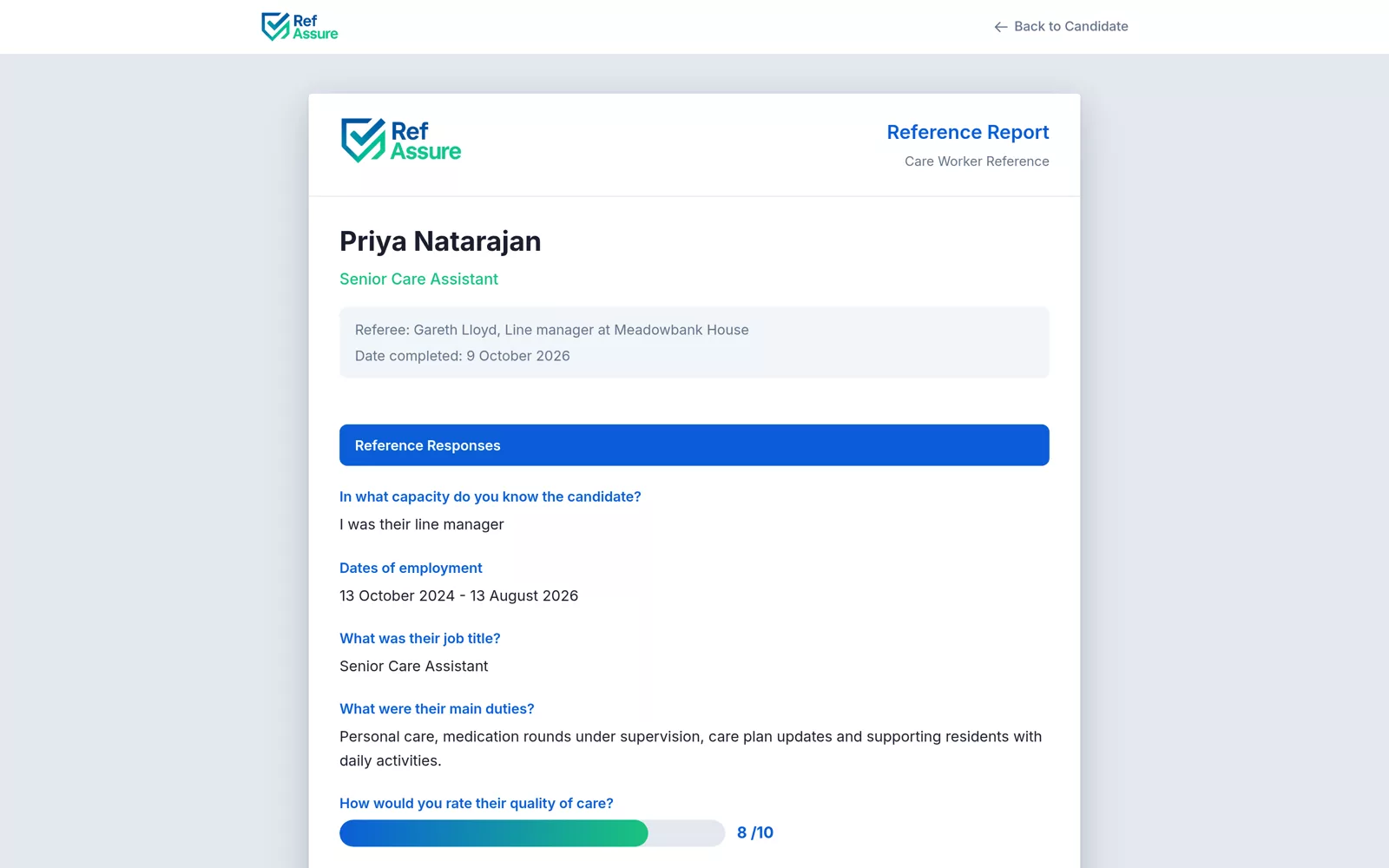
A clear barred list result tells you who is not allowed in. A reference tells you about the person you are letting in.
- Ask whether the person was subject to any disciplinary or safeguarding process
- Ask the referee to confirm dates, role and the reason the job ended
- Ask whether they would employ the person again in a care role
- Every answer is signed by the referee and saved in a PDF with a full audit trail
Safeguarding checks, in a sensible order.
Consent and references
At application or shortlisting, collect consent and send reference requests so answers arrive before interview.
Interview
Explore gaps, reasons for leaving and anything a referee raised. Record what was said.
Enhanced DBS
After a conditional offer, apply with the right barred list boxes ticked for the role.
Decision
Review the full file before day one. If you go ahead despite a concern, record your reasons.
Barred list questions
More in the full FAQs.
Can an employer check the barred list directly?
What is a children's barred list check?
What is an adults barred list check?
Does a clear barred list check mean the person is safe to employ?
Does RefAssure carry out barred list or DBS checks?
What safeguarding questions should a care reference include?
Related guides
The barred list is one check. References are the other.
Your first reference is free, and RefAssure chases the referee for you.