
What safeguarding questions should a care reference ask?
The questions that bring out what a DBS check cannot show, worded so referees can answer them clearly and you can act on the replies.
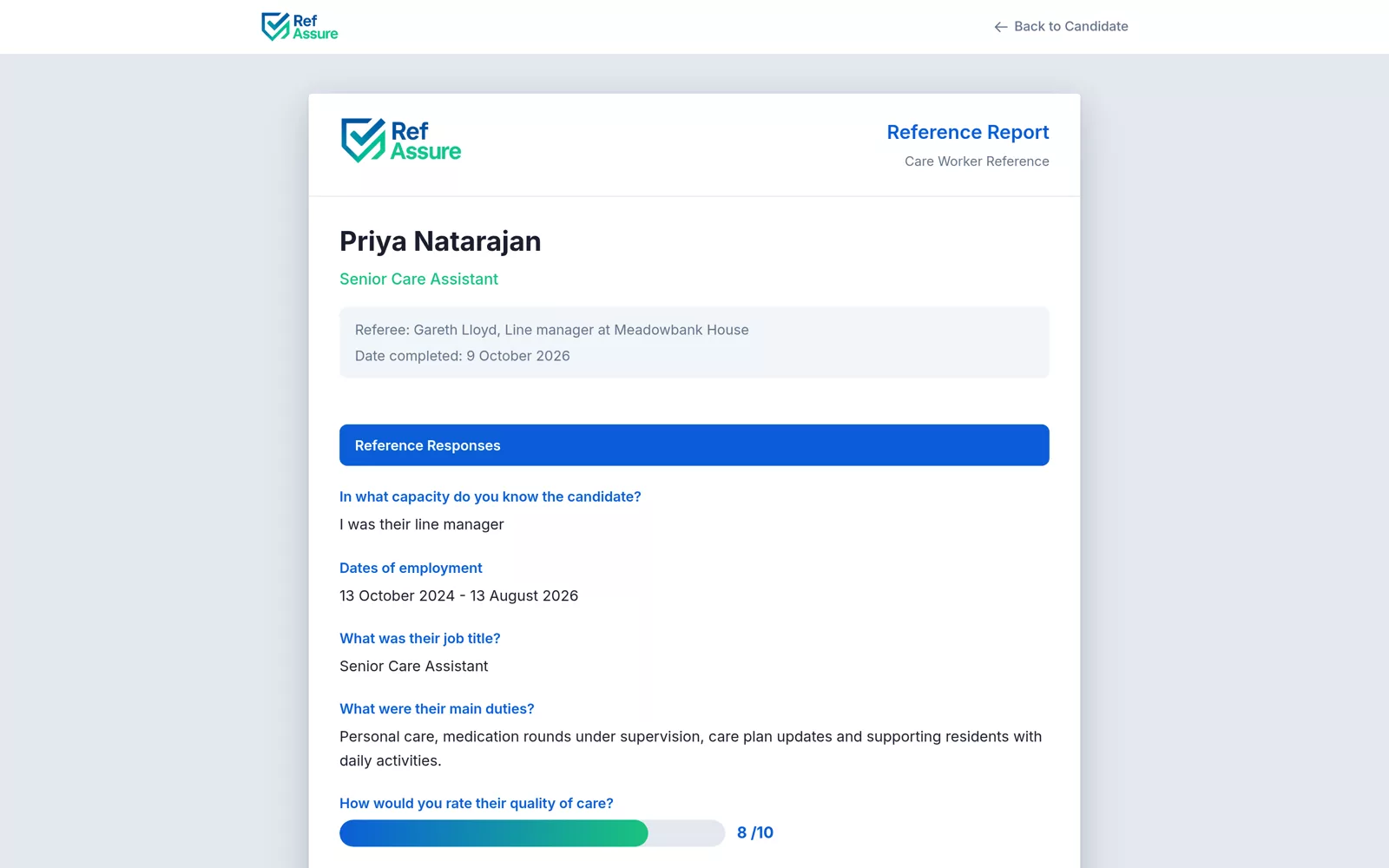
What safeguarding reference questions should you ask?
Ask each referee whether they have any concerns about the candidate working with vulnerable adults or children, whether the candidate faced any disciplinary action or substantiated safeguarding concerns, why they left, and whether they would re-employ them in a care role. RefAssure lets you add these questions to your template once, then sends, chases and files every signed answer for you.
Six questions that earn their place.
Ask them of every previous care employer, in writing, using the same wording each time.
Suitability
Do you have any concerns about this person working with vulnerable adults or children? If yes, please give details.
Disciplinary history
Was the candidate subject to any disciplinary action while employed by you, including any that is still open?
Safeguarding concerns
Were any safeguarding concerns or allegations about the candidate substantiated, or are any still being investigated?
Reason for leaving
Why did the candidate leave? Care regulations expect you to verify this where the role involved vulnerable people.
Dates and role
Please confirm the start date, end date and job title. Check these against the employment history the candidate gave you.
Re-employment
Would you re-employ this person in a care role? If not, please explain why.
Why these questions matter in care
A DBS check shows criminal records and, at the enhanced level with the adults barred list, whether someone is barred. It does not show what happened inside a previous employer: a written warning for rough handling, a medication error that was investigated, or a pattern of poor boundaries with people they supported. A reference is how that information reaches you.
For providers registered with the CQC, Regulation 19 and Schedule 3 set out what you need to hold for each worker. That includes satisfactory evidence of conduct in previous health or social care roles, or roles working with children or vulnerable adults, and verification, so far as reasonably practicable, of why that employment ended. Safeguarding questions are how you collect that evidence in a form you can show an inspector. Our Regulation 19 guide covers the full list.
Word questions so referees can answer them
Referees are often cautious. Many employers have a policy of giving dates and job title and little else, and every referee has a duty to be accurate and fair. Short, factual questions get better answers than open ones. Ask about facts and outcomes (was there disciplinary action, was a concern substantiated) rather than opinions, and give a box for details.
- Use yes or no questions with a follow-up paragraph box for anything that needs explaining.
- Ask about substantiated concerns, not rumours. Referees should not include allegations that were found to be unfounded or malicious.
- Keep the suitability question explicit. A referee who will not answer it is telling you something.
What to do when an answer raises a concern
A concern is not an automatic rejection, but it must be resolved before the person starts. Contact the referee to clarify, discuss it with the candidate, and decide whether to proceed. Record the concern, what you did and why you decided as you did. If a referee gives just dates, ask for a further referee from another care role. Where you suspect someone should be barred, the DBS has a separate referral process.

Set your questions once.
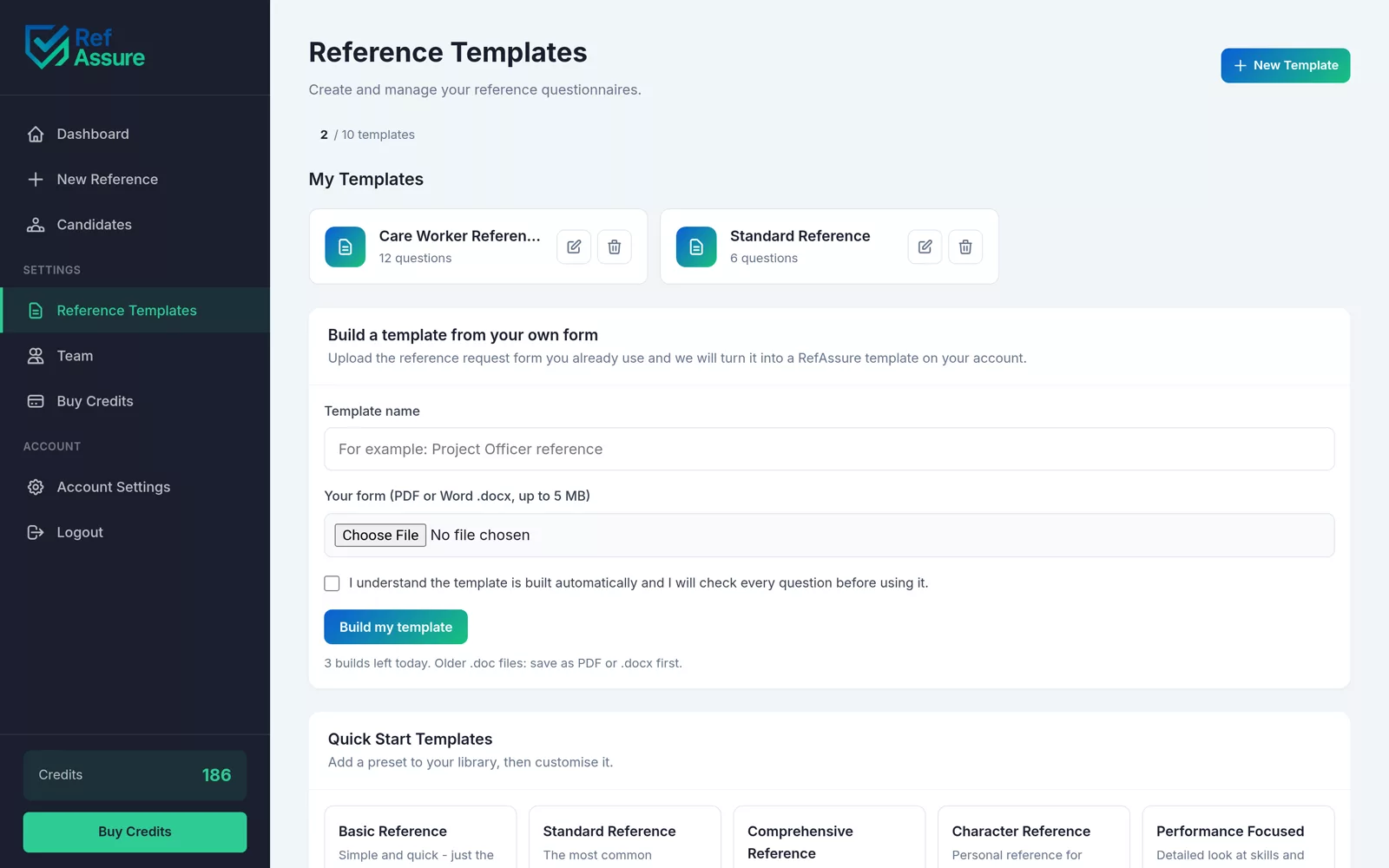
RefAssure has no built-in sector templates. Add the safeguarding questions your service expects to a template once and every request uses the same wording.
- Yes or no, paragraph, 1 to 10 rating and date question types
- Up to 25 questions per template, up to 10 templates
- Already have a form? Upload the PDF or Word file and check the template it builds
- Referees sign their answers before they submit
Chased for you, day by day.
5 emails and up to 2 texts over 12 days, stopping the moment the referee replies.
Safeguarding reference questions
More in the full FAQs.
Can a previous employer refuse to answer safeguarding questions?
Yes. There is generally no legal duty to give a reference, and some employers give just dates and job title. If that happens, ask for a further referee from another care role and record what you received. See our guide to safe recruitment in care.
Is it legal to ask about disciplinary action in a reference?
Yes, as long as the candidate knows references are being sought and the information is handled under UK data protection law. Referees should give facts that are true, accurate and fair. RefAssure collects the candidate's signed consent online before any referee is contacted.
How many references does a care worker need?
Regulations do not fix a number. Many providers ask for two, including the most recent employer and the most recent role working with vulnerable adults or children. The important thing is covering previous care roles and checking the reason each one ended.
Do safeguarding questions replace a DBS check?
No. They cover different ground. The DBS shows criminal records and barred list status, while references show conduct and concerns inside previous jobs. Our page on DBS checks and references explains how they fit together.
What if a referee mentions a concern by phone but will not write it down?
Make a dated note of the call, who you spoke to and what was said, then follow it up with the candidate before deciding. A written, signed reference is stronger evidence, so ask the referee whether they will confirm the facts in writing.
Can I use the same questions for every care role?
You can, and a consistent core helps. Add role-specific questions where they help, such as medication administration for senior carers. RefAssure lets you keep up to 10 templates on one account. More ideas in our list of reference check questions.
Related guides
Safeguarding answers, signed and filed.
Your first reference is free. Add your questions once and RefAssure does the chasing.