
The Conduct Regulations 2003: what agencies must check
The rules every UK agency and employment business works under, in plain English, and where references fit.
What do the Conduct Regulations require agencies to check?
The Conduct of Employment Agencies and Employment Businesses Regulations 2003 require agencies to confirm a work-seeker's identity, that they have the experience, training, qualifications and authorisations the role needs, and that they are willing to do it. Where the work involves vulnerable people, two references from non-relatives are required. RefAssure collects and chases those references with a signed audit trail.
The Employment Agencies Act 1973 and the Conduct Regulations
The Employment Agencies Act 1973 is the primary law for recruitment businesses in Great Britain. The detailed rules sit in the Conduct of Employment Agencies and Employment Businesses Regulations 2003, usually called the Conduct Regulations. They apply to two kinds of business:
- An employment agency introduces work-seekers to hirers who employ them directly, as in permanent recruitment.
- An employment business supplies temporary workers who work under the hirer's control but are engaged by the business.
Enforcement used to sit with the Employment Agency Standards Inspectorate. Since April 2026 that work has been part of the Fair Work Agency. The full text is on legislation.gov.uk, and it is worth reading the regulations themselves rather than summaries.
Regulation 19: confirm the facts first
Before an employment business supplies anyone, it must confirm the work-seeker's identity and that they have the experience, training, qualifications and any authorisation the hirer considers necessary or the law or a professional body requires. Agencies have the same duty where the role involves working with, caring for or attending vulnerable people. Both must confirm the work-seeker is willing to do the job.
Regulation 20: protect the hirer and the worker
Agencies and employment businesses must take reasonably practicable steps to make sure both sides know of any legal or professional requirements for the role, and make enquiries to check the placement would not be detrimental to either. If an employment business learns that a worker is unsuitable, it must tell the hirer without delay and end the supply. An agency that learns of such information within three months of an introduction must tell the hirer.
Regulation 22: vulnerable people and two references
Where a work-seeker will work with, care for or attend vulnerable people, the agency or business must obtain copies of relevant qualifications or authorisations and offer them to the hirer, and obtain two references from people who are not relatives and who have agreed the references may be disclosed to the hirer, and offer copies to the hirer. It must also take all other reasonably practicable steps to confirm suitability. If it cannot fully comply, it must tell the hirer what it was unable to do and what steps it took.
Regulation 29: keep records
Records that show compliance must be kept for at least a year, and work-seeker details for at least a year after you last provided services to them. They can be held electronically if you can produce them on request.
Turning the rules into a reference template.
Add these to your template once, and the evidence collects itself for every work-seeker.
Referee relationship
Ask how the referee knows the candidate, and confirm they are not a relative.
Agreement to share
A yes or no question confirming the referee agrees the reference can be passed to the hirer.
Experience for the role
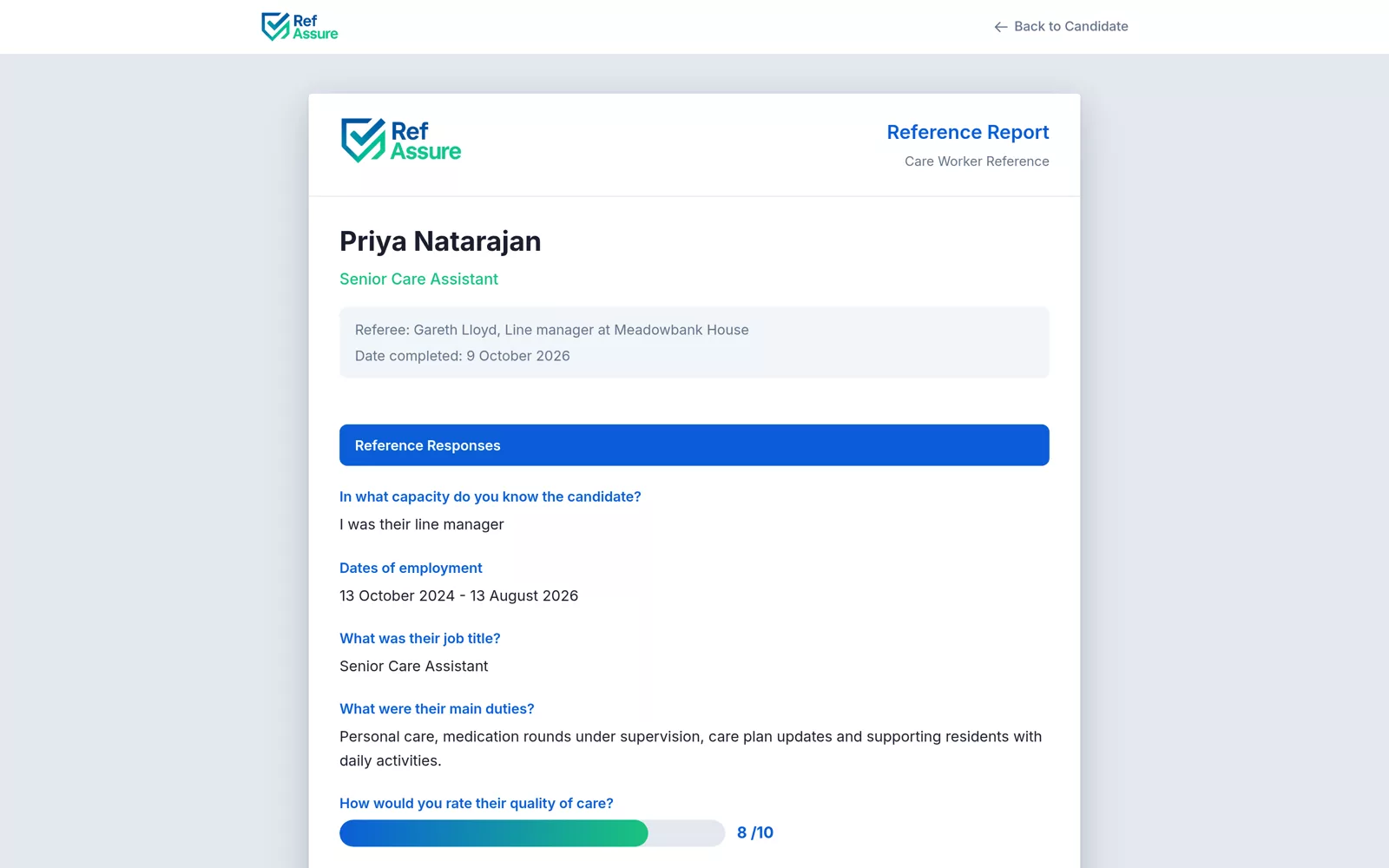
Dates, job title and duties, so you can confirm the experience the hirer needs.
Suitability
Whether the referee knows of any reason the candidate should not work with vulnerable people.

Records that stand up to an inspection.
Every RefAssure reference produces a signed PDF with a timeline, so you can show what you did and when.
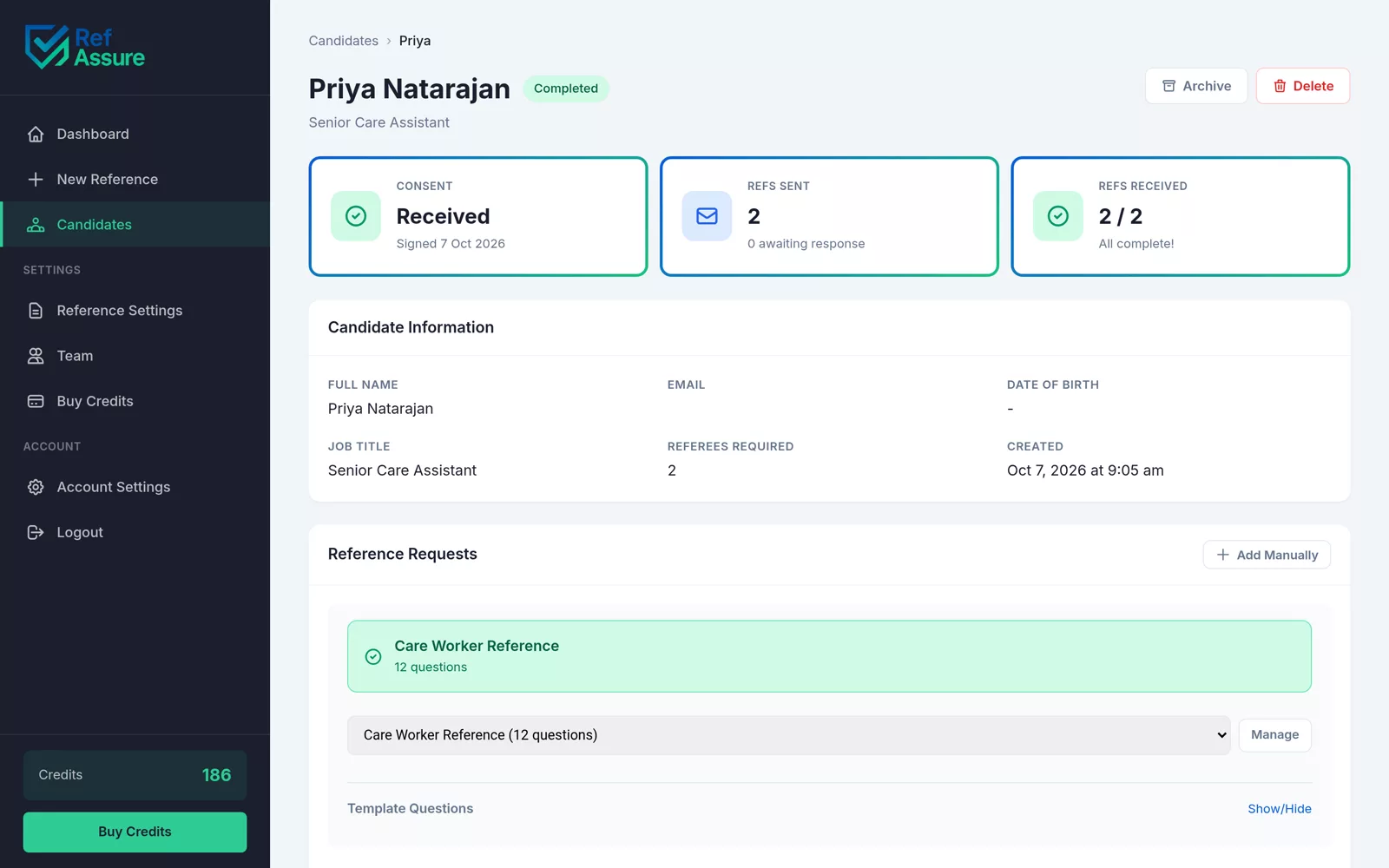
- Candidate consent with signature, before referees are contacted
- Referees sign their answers through a unique secure link
- Timestamps for every request, reminder and completion
- Told after day 12 if a referee is silent, so you can add another
Two references, chased for you.
5 emails and up to 2 texts over 12 days, stopping the moment the referee replies.
Conduct Regulations questions
More in the full FAQs.
Do the Conduct Regulations require references for every placement?
The two-reference requirement applies where the work-seeker will work with, care for or attend vulnerable people. For other roles the regulations require confirmations about identity, experience and willingness, and many clients require references by contract. See recruitment agency compliance.
Who enforces the Employment Agencies Act 1973?
The Fair Work Agency, which took over the work of the Employment Agency Standards Inspectorate in April 2026. GOV.UK has current contact and complaint details.
Can a reference come from a relative?
Not for the two references required where vulnerable people are involved. The regulations say they must come from people who are not relatives of the work-seeker.
What if we cannot get two references?
The regulations let you comply as far as you can, but you must tell the hirer you could not fully comply and what steps you took. RefAssure's chase history shows exactly what was attempted and when.
Do the Conduct Regulations cover umbrella companies?
The regulations govern agencies and employment businesses. If you work with umbrella companies, see our umbrella company references guide for how references fit.
How long must agencies keep records?
At least one year, and work-seeker details for at least a year after you last provided services to them. UK GDPR still expects you not to keep data longer than you need. See reference consent and UK GDPR.
What does RefAssure cost?
Your first reference is free, then credits cost from 99p down to 80p with no monthly fee and no VAT added. See pricing.
Related guides
Evidence for every Conduct Regulations check.
Your first reference is free. Consent, chasing and a signed PDF included.