
Employment history checks: how to verify work history.
Confirm the dates, the roles and the gaps a candidate has given you, with evidence you can show later. Temps and agency workers included.
What is an employment history check?
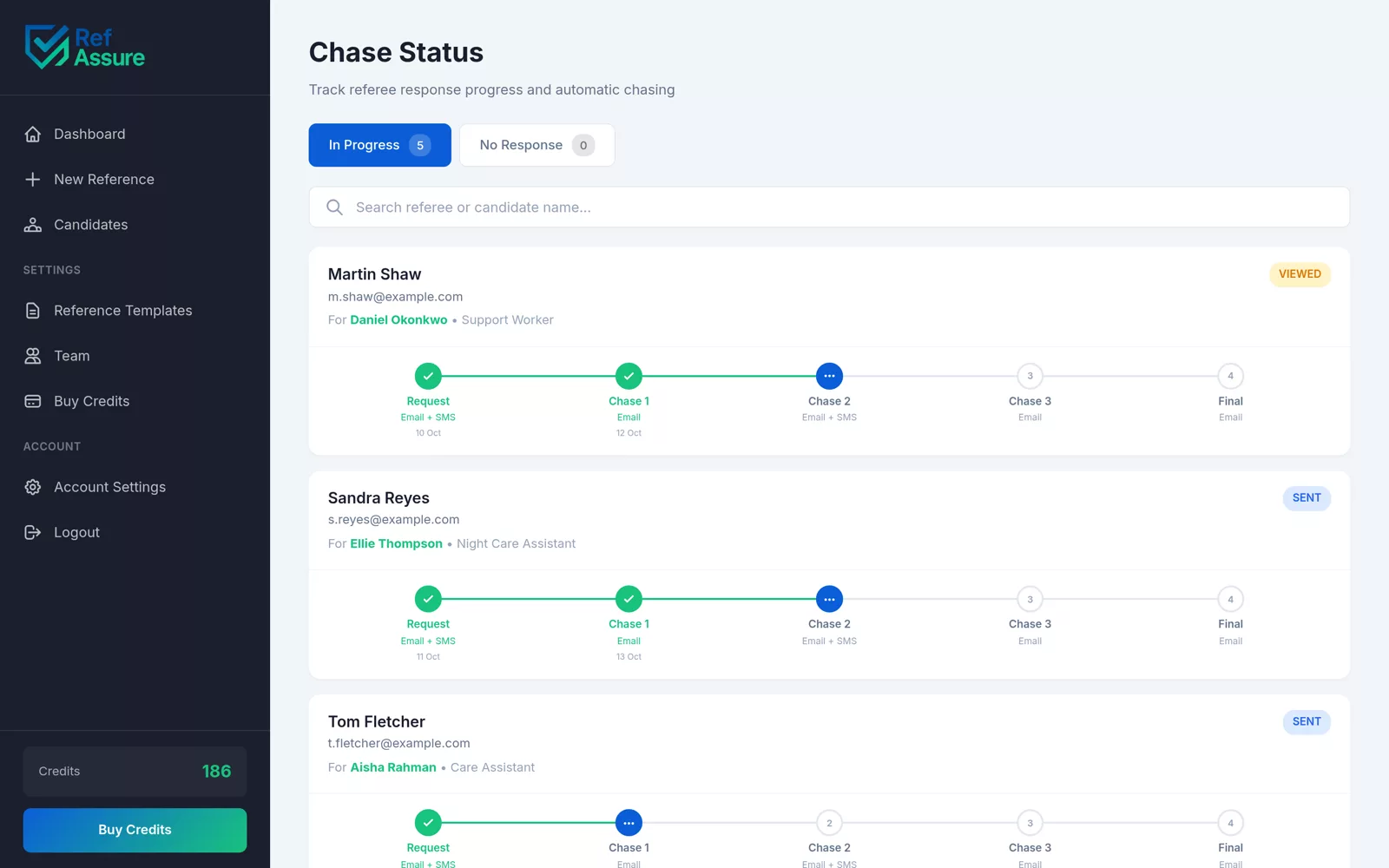
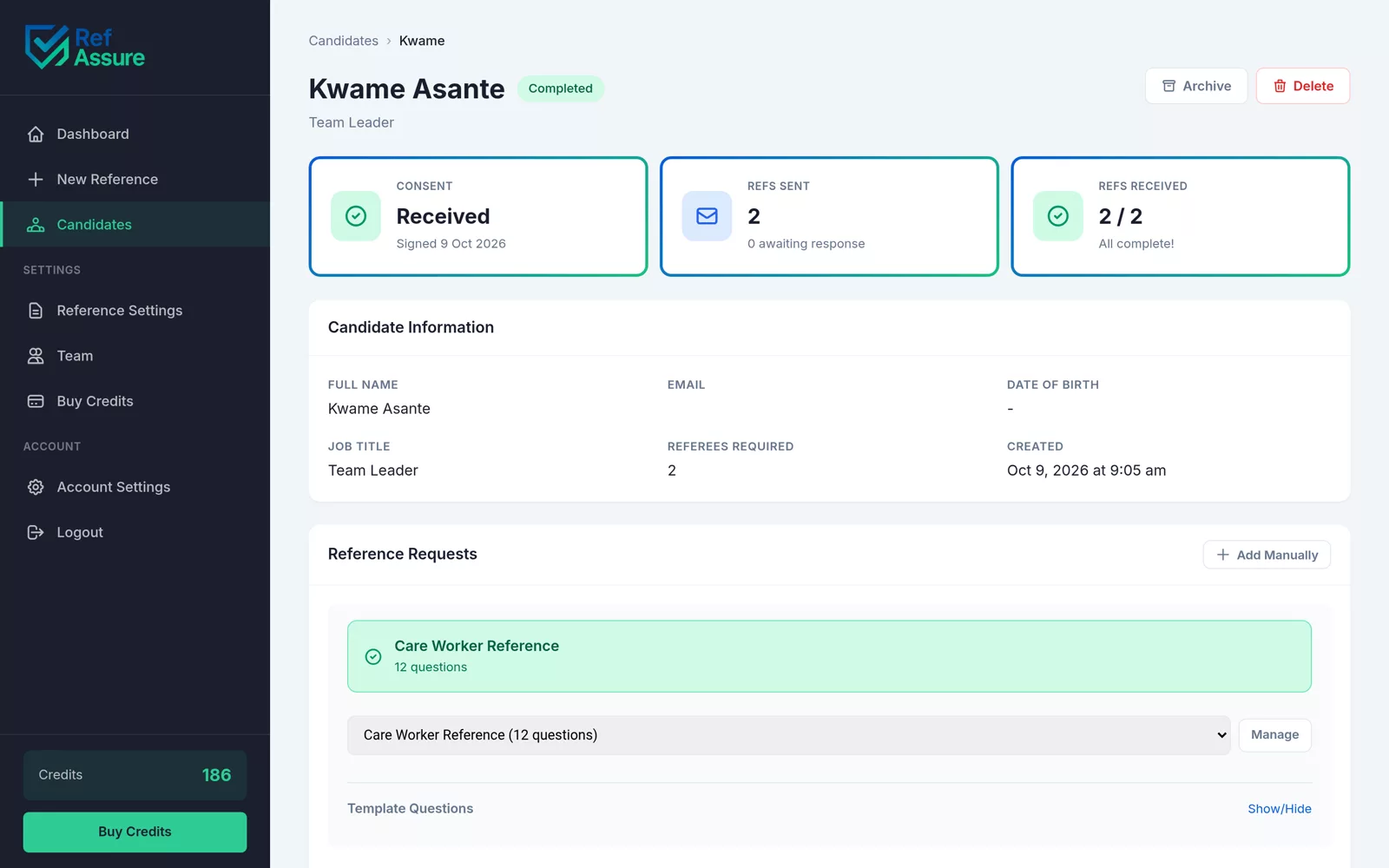
An employment history check verifies the jobs a candidate says they have held: employer, job title, start and end dates and, where given, the reason for leaving. You confirm each role with the employer, usually through a written reference, and ask the candidate to explain any gaps. RefAssure collects these confirmations with signed consent, chases each employer automatically and returns a signed PDF.
How to verify work history.
Collect the full history
Ask for every role in the period you check, with month and year for start and end dates, and a contact for each employer or agency.
Get consent
Tell the candidate who you will contact and why. RefAssure collects consent online, with a signature, before any referee is contacted.
Confirm with each employer
Ask each employer to confirm dates, job title and reason for leaving, plus any questions your role needs.
Explain the gaps
Compare confirmed dates with the CV. Ask the candidate to explain gaps in writing and keep that explanation on file.
Where employment verification evidence comes from.
References are the usual route, but they are not the single source.
Employer references
The previous employer confirms dates, role and conduct in writing. This is the evidence regulators and clients expect to see.
HMRC records
Candidates can see their employment history in their HMRC online account or the HMRC app and share a copy with you.
Payslips and P60s
Useful to back up dates when an employer has closed or will not respond.
Agency records
For temps, the agency that placed them is usually the employer of record and the right referee.

How far back should a work history check go?
There is no single legal rule for every employer. The period depends on your sector, your clients and your own policy. Some common reference points:
- Care. For CQC-registered services, Schedule 3 of the Regulated Activities Regulations asks for a full employment history, together with a satisfactory written explanation of any gaps. See care worker pre-employment checks.
- Government work. The Baseline Personnel Security Standard asks for at least three years of employment or education history. See BPSS checks.
- Security. BS 7858 screening usually covers five years. See BS7858 screening.
- Everyone else. Many employers confirm the last two or three years, or the last two employers, and go further for senior or trusted roles.
Whatever you choose, write it in your recruitment policy and apply it consistently.
Temps and fragmented histories
A permanent candidate's history is usually a short list of employers. A temp's may be a run of short assignments through several agencies, with gaps between them. That does not make it unverifiable. Ask the agency that placed them, not the client site, because the agency is usually the employer. For very short engagements, ask about attendance, reliability and conduct within that time rather than detailed performance.
When a reference cannot be obtained, for example because a business has closed, record what you tried and what other evidence you accepted. A documented attempt is far better than a blank file. Our temp worker references guide covers agency workflows in more detail.
Reply by email? Still captured.
Some employers ignore forms and just reply to the email. RefAssure captures those replies and forwards them, so nothing is lost.
- 5 emails and up to 2 texts over 12 days, stopping when the referee replies
- Bounced requests flagged, most within minutes
- After day 12 you are told, so you can add another referee
- Timestamps for consent, requests, reminders and completion in the PDF
Employment history questions
More in the full FAQs.
Is an employment history check the same as a reference check?
They overlap. An employment history check confirms facts: dates, titles and reasons for leaving. A reference check can also ask about performance and conduct. Most employers do both in one request. See reference check questions.
What counts as a gap in employment?
It depends on your policy. Some employers ask about any gap of more than a month, others set a longer threshold. Regulated sectors often set their own rules. Ask the candidate to explain gaps in writing and keep the explanation with the confirmed dates.
Can a previous employer refuse to confirm employment?
Generally an employer does not have to give a reference unless a regulator or contract requires it, but most will confirm dates and job title. If they refuse, use HMRC records or payslips and record what you did.
Do I need the candidate's consent?
You should tell candidates who you will contact and why, and many employers collect written consent. RefAssure collects consent online, with a signature, before contacting anyone. See candidate consent.
How long does an employment history check take?
With RefAssure, the median across 229 completed references was about 23 hours, and half were done within 24 hours. Longer histories with more employers take longer because each employer replies separately.
How much does it cost?
Your first reference is free. After that, credits cost from 99p down to 80p each, with no monthly fee and no VAT added. See pricing.
Related guides
Every date confirmed, every gap explained.
Your first reference is free. RefAssure chases each employer and files the evidence.